
 June 26, 2024
 9 min
9 min 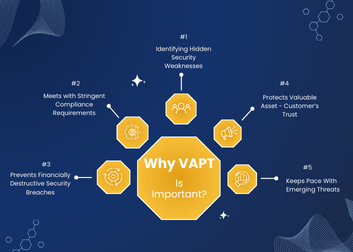
As the digital world rapidly changes, the proliferation of cyber threats is increasing, underscoring the importance of developing defences around IT infrastructure for businesses. Vulnerability Assessment and Penetration Testing (VAPT) is a crucial component of the assessment process, identifying potential loopholes, misconfigurations, and other weaknesses in systems before cybercriminals can exploit them. Determining why VAPT is required goes beyond just compliance; it ensures business continuity, safeguards sensitive data and strengthens customer trust in a competitive market.
Furthermore, consistent VAPT is not just used as a proactive approach but is necessary for every organization. For every software update, software integration, or infrastructure change, a new vulnerability can be introduced. Criminals consistently change their methods of operational crime, and organizations can stay one step ahead of that challenge with periodic assessments. Organizations can become more resilient to data loss breaches, reputational and financial losses, etc., by incorporating into the organization’s overall cybersecurity strategy and calendar of events, Vulnerability Assessment and Penetration Testing (VAPT) type processes/activities.
Understanding VAPT Procedure
The Vulnerability Assessment and Penetration Testing (VAPT) framework follows a methodology that provides a structured way for organizations to identify, assess and manage the risk associated with security vulnerabilities and weaknesses that exist in the organization’s IT environment. The first aspect is a vulnerability assessment. This utilizes manual processes and automated solutions to scan networks, systems, applications, etc., for known vulnerabilities.
This stage provides a detailed map of potential risks, including misconfigurations, weak authentication mechanisms, and outdated software, highlighting the reason why VAPT is required. The objective of this process is to establish a prioritized list of vulnerabilities that malicious actors can exploit.
Once vulnerabilities are identified, the penetration testing stage takes the process further by actively attempting to exploit those weaknesses in a controlled environment. Ethical hackers simulate real-world attack scenarios to determine how far an attacker could progress if vulnerabilities remain uncorrected. This validates the severity of the findings and exemplifies the impact on business operations, compliance posture, and data security.
Ultimately, the VAPT process culminates in a comprehensive report with actionable recommendations to mitigate risks and enhance the security architecture. This process allows organizations to transition from theoretical risks to understanding true security resilience.
Key Reasons Why VAPT is required for Business Security
Organizations frequently encounter evolving cyber threats that pose risks to sensitive data, reputation, and business continuity. Hence, determining why VAPT is required is essential, as it identifies vulnerabilities, aids in risk assessment, and enhances the security posture. By mimicking actual attack scenarios on an organization, VAPT is a way for organizations to stay ahead of hackers and protect through tested and verified means.
1. Identifying Hidden Security Weaknesses
All digital systems inevitably have vulnerabilities, so you’ll want to discover them before malefactors do. VAPT acts as a proactive security checkup for your organization, thoroughly scrutinizing your networks, cloud environment, applications and connected devices for any exploitable vulnerabilities.
This includes discovering misconfigured servers that could inadvertently expose your sensitive data, outdated software with known vulnerabilities, and weak password management policies that would facilitate easy brute force attacks, as well as provide a means for hidden backdoors in vulnerable web applications.
The value of VAPT lies in its ability to identify theoretical vulnerabilities, while penetration testing actually tests these vulnerabilities to exploit them, much like a real hacker would. This purposefully conducted methodology uncovers vulnerabilities that are risks to your business. The drawback of not having an ongoing VAPT is that you are operating blind, not knowing if you have any digital doors that were unlocked until you are robbed.
2. Meets with Stringent Compliance Requirements
The regulations surrounding cybersecurity and data protection have become stricter in 2025. Laws like GDPR, PCI DSS, HIPAA, and numerous other new state privacy regulations exist not only to recommend but also to require security testing.
Additionally, the consequences of non-compliance have escalated significantly due to increased fines. Under GDPR, violations can cost organizations up to 4% of their profits of their entire annual international revenue. The new SEC regulations require disclosures to the public within 72 hours of discovering a cybersecurity incident, which necessitates a strong foundation for prevention.
Overall, VAPT provides documentation that demonstrates your organization is taking cybersecurity seriously while being compliant with regulatory obligations. The detailed report generated as part of the testing process serves as evidence of due diligence in the event of an audit or incident investigation. For many industries, it is just as important to document current VAPT testing as it is to generate accurate financial statements.
3. Prevents Financially Destructive Security Breaches
The financial ramifications of cyberattacks have definitely reached staggering levels! According to recent reports, the average cost of a data breach now exceeds $5 million. Consequently, ransom attacks often demand payments in the hundreds of thousands to restore access to systems. In addition to the immediate extortion demands, businesses are also confronted with regulatory penalties, legal defence costs associated with customer lawsuits, recovery of damaged IT capabilities, and forensic investigations.
Far more damaging, however, are indirect costs, including the loss of customer loyalty, which can take years to recover, loss of competitive positioning due to the theft of intellectual property, and potential revenue loss resulting from operational downtime.
VAPT is akin to an insurance policy for these disastrous potential outcomes, proactively and consistently identifying and mitigating attack vectors before they can be exploited. The nominal investment in regular security assessments pales in comparison to the hypothetical financial destruction of a single successful attack.
4. Protects Valuable Asset – Customer’s Trust
These days, customer data is a valuable asset and an organization’s liability. A high-profile breach continues to dominate headlines, prompting customers to question who they can trust with their personal information. A single security incident can disrupt your years of carefully built reputation. Several studies suggest that approximately 60% of customers tend to abandon a business after experiencing a data breach.
Today’s VAPT involves more than just ensuring you’ve checked the “technical” box; it also verifies that each point of customer data handling is highly secure. This means checking sensitive information, such as credit card numbers and personal information, is appropriately protected by encryption, your authentication tips can’t be easily overridden, and of course, your APIs aren’t “leaking” any private information. At a time when “secure by design” is more of a customer expectation than a luxury, VAPT will ensure that your systems are aggressively protecting what matters most.
5. Keeps Pace With Emerging Threats
The methods utilized to protect the system against hackers in the previous year may not be effective currently. Moreover, Artificial Intelligence (AI) has become a double-edged sword, as cybercriminals utilise AI to generate targeted phishing emails, identify new vulnerabilities, and develop malware that continuously evolves to evade detection.
This is the reason why VAPT cannot be treated as a one-time project. Adequate security measures require regular reassessment as new threats emerge and your system evolves. Many companies incorporate VAPT in DevOps cycles, testing major updates before they go live. A few companies opt to schedule quarterly or biannual comprehensive evaluations to ensure nothing goes unnoticed. A security-conscious organization continually tracks these activities, coupled with periodic comprehensive penetration tests.
6. Maintains Business Continuity with Rising Threats
Cyberattacks aren’t only designed to steal data, but also to disrupt business operations. Yes, you read it right! Ransomware epidemics have evolved into what security experts term “triple extortion,” where attackers encrypt your data, threaten to leak it publicly, and notify customers about the breach unless multiple payments are made. Another alarming trend among hackers includes targeting backup systems to prevent recovery.
Additionally, regular VAPT scans look for these operational vulnerabilities. It identifies whether disaster recovery systems are isolated from main networks, tests whether essential systems have redundancy and verifies that security tracking can identify intrusion attempts before they cause damage. For many businesses, the cost of one day of downtime can exceed the cost of an entire year of extensive security testing.
What is the Ideal VAPT Frequency for Your Organization?
It is essential to determine how often you must perform security testing, it depends on aspects like:
- High-Risk Industries (Healthcare, Finance & More): Conduct at least quarterly evaluation with consistent tracking in between. However, note that any substantive change to a system requires follow-up testing.
- In the case of Medium-Risk Businesses (SaaS, e-commerce, or Professional Services): You should conduct VAPT testing every six months, and conduct at least some vulnerability scanning during the interim. In the case of large volumes of sensitive data, you will want to perform more frequent testing.
- For Low Risk Businesses (Small local businesses and brochure websites): Annual extensive testing, along with quarterly automated vulnerability scans. You must perform immediate testing if any website or system changes.
It is essential to note that frequency can vary according to your specific profile. Many companies are adopting direct Continuous Security Validation, providing continued assurance through periodic assessments.
Conclusion
Conducting Regular VAPT as a form of security assurance, a compliance item, or a measure to ensure your business remains safe from cyberattacks is often misunderstood. Identifying the vulnerabilities before adversaries have an opportunity to exploit them provides a proactive, defence-in-depth strategy that decreases risk, protects sensitive data, and increases trust.
Another reason why VAPT is required is to maintain systematic protection and strategic security maturity. Cyber protection is an ever-evolving target due to newly discovered vulnerabilities that emerge periodically, and it keeps your dispositions in alignment with these threats. Additionally, regular VAPT provides a vital mitigation strategy against future risks, as well as demonstrates your commitment to security excellence, making a regular VAPT practice a must for any enterprise serious about safeguarding its digital ecosystem.
___________________________________________________________________________